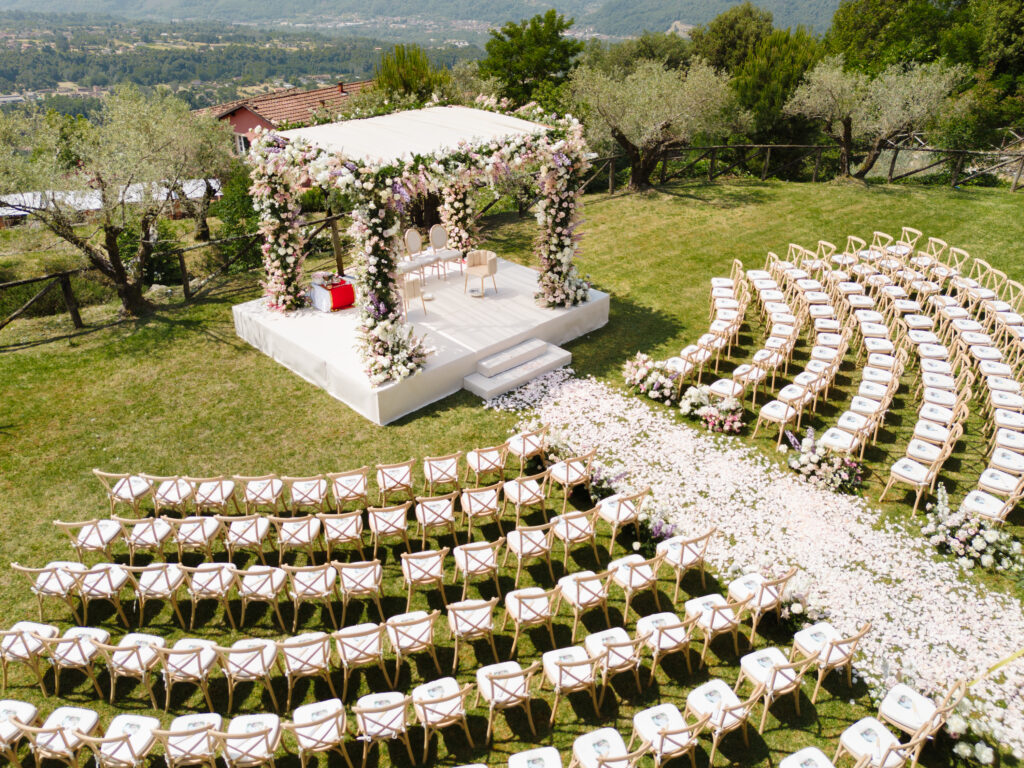
Indian wedding in Italy: rituals, colors and what changes in the planning
An Indian wedding in Italy is the meeting of two cultures that celebrate life with intensity.
On one side, centuries of rituals, colors and traditions passed down through generations. On the other, Tuscan villas, lakes and historic Italian cities. This October, I am leading another of these celebrations in Tuscany, and each one reminds me that the planning happens in four layers: the time span of the celebration, the rituals, the aesthetics and the table, and the logistics of large groups.
A celebration over several days
Unlike a traditional Western wedding, an Indian wedding usually spans three days or more, each with its own atmosphere. The Haldi, with the turmeric paste that blesses the couple. The Mehndi, with henna drawn on the bride’s hands and plenty of music. The Sangeet, a night of dancing and family performances. And finally, the wedding day itself, with the ceremony and reception.
Each event calls for a different space, decor, menu and schedule, and all of them need to speak to each other like chapters of the same story.
The rituals that call for preparation
Some moments require preparation that goes far beyond decor. The Baraat, the groom’s festive arrival, often on horseback and accompanied by music and dancing, needs permits, security and coordination with the venue. The sacred fire, which guides the vows during the ceremony, must be checked in advance with each venue so it can take place safely and within the rules. And each community, whether Punjabi, Gujarati, Sikh, Tamil or another, has its own rites that need to be understood before anything is designed.
Colors, flowers and a table that honors every tradition
The palette of an Indian wedding is vibrant: golds, reds, oranges, pinks and greens blend with abundant flowers, rich fabrics and warm lighting. When it comes to food, planning includes vegetarian menus, options without onion and garlic, Jain cuisine and other religious requirements, often bringing specialized chefs together with the excellence of Italian cuisine.
Large groups, flawless logistics
Indian weddings often bring together hundreds of guests from different countries. That means coordinating accommodation, transfers, airport arrivals, travel documents and a programme that keeps everyone cared for over several days. It is an operation that demands method, a prepared team and vendors used to working at this scale.
An Indian wedding in Italy is not one culture adapted to another. It is the union of both. The sacred fire, the Baraat, the henna and the music change from family to family, from community to community.
What remains, in every celebration I lead, is the commitment to make each person feel at home, even so far from it, and to make sure every ritual happens with all the meaning it carries.